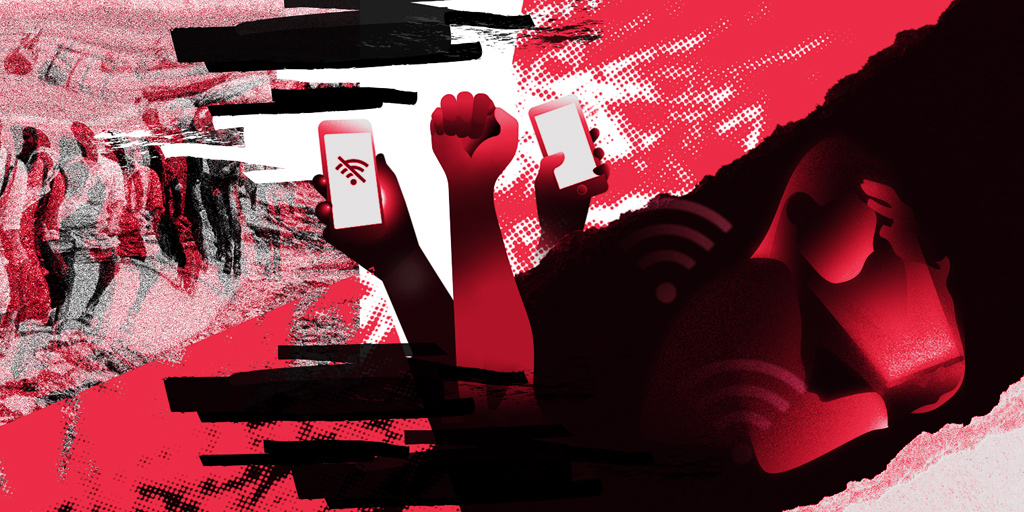
Access Now condemns the ongoing near-total internet shutdown in Iran, which began on February 28, 2026, and urgently calls on Iranian authorities to immediately restore full internet access and refrain from imposing further disruptions.
Internet connectivity sharply dropped by more than 98% directly after the U.S. and Israel launched their unlawful military attacks on Iran. As the war enters its 12th day, millions of people in Iran have been cut off from the global internet at a moment when access to communications and reliable information is most critical. The reported death toll in Iran has surpassed 1,000 people, and the military escalations continue to affect civilians across the Middle East, including the Gulf States and in Lebanon, where the ongoing Israeli attacks have reportedly killed over 500 people and displaced more than 500,000.
Iranian authorities have long relied on internet shutdowns to control information during moments of crisis. Earlier this year, authorities already imposed one of the most comprehensive and longest nationwide blackouts, leaving people across the country unable to contact loved ones, follow unfolding events, or access essential information. The blackout also blocks journalists, human rights defenders, and all people from sharing evidence and documenting possible violations at a moment when independent reporting and verification are critical. Fragments of footage from the ground that emerge online can be crucial material for current and future investigative and accountability efforts, as underscored by the recent media investigations into the elementary school bombing in southern Iran which killed at least 175 people, mostly children. This is more critical as the broader information vacuum created by the shutdown is further exacerbating confusion, manipulation and the spread of disinformation and fabricated footage by ordinary internet users and conflict parties alike.
Access Now will once again reiterate: protecting and restoring access to open and secure communications networks is a must during armed conflict. As we highlighted in our recent Typology of Harm report, internet shutdowns in conflict zones have life-and-death consequences. They put civilians at risk of death, injury, and illness, cause psychological trauma and mental distress, disrupt livelihoods, and block people’s access to essentials for survival like food and medicine. They also block journalists and human rights defenders, weaken social cohesion, and cause lasting socio-economic harm long after connectivity is restored.”
This latest shutdown further highlights the urgent need for resilient connectivity options when governments disable national networks. Among these viable options is Direct-to-Cell (D2C) satellite technology, which can connect ordinary smartphones directly to satellites, bypassing censorship and internet shutdowns. As satellite companies are developing or launching their D2C capabilities now and standards setting is under way, Access Now, together with WITNESS and other civil society partners, call on governments, regulators, and technology companies to prioritize humanitarian deployment and accelerate efforts to enable such technologies in ways that safeguard human rights and ensure connectivity during crises.
Access Now, once again, calls on Iranian authorities to immediately restore full internet access and refrain from imposing further disruptions. We also urge international actors and technology providers to prioritize measures that safeguard connectivity, protect the free flow of information, and ensure that civilians are not left in digital darkness during times of conflict.