Note: This statement will be updated across the week of January 12 –16, 2026, to reflect verified figures, signatories, and relevant data as they become available. All figures are based on information from the Human Rights Activists News Agency (HRNA). Due to access constraints and ongoing disruptions to communications, the actual number may be higher.
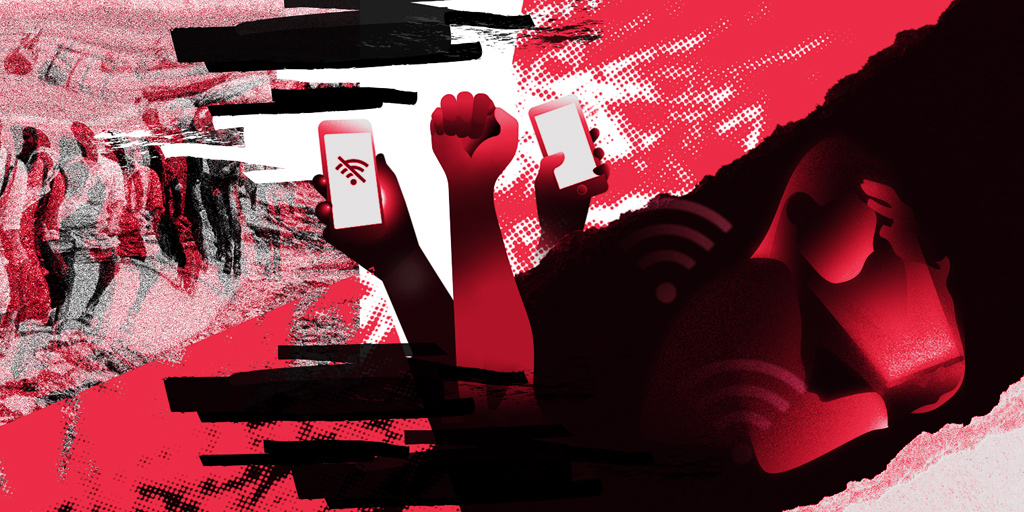
Access Now and the #KeepItOn coalition unequivocally condemn the blatant and violent repression of people in Iran protesting against the regime amid widespread inflation and deepening economic hardship. What began as protests over currency inflation quickly evolved into an outcry against decades of repression, corruption, and systemic injustice, echoing previous waves of nationwide unrest. We are also alarmed over the ongoing internet blackouts that severely hinder journalists, activists, and human rights defenders from accessing timely information and verifying human rights abuses.
On December 28, 2025, protests erupted nationwide following the sudden collapse of Iran’s national currency. Filterwatch reported that on December 29, 2025, Iranian authorities began throttling or degrading internet speed by roughly 35% and blocking circumvention tools in targeted protest areas to suppress communication. The partial internet restrictions later culminated in a complete nationwide shutdown of internet and mobile connectivity and international phone calls on the evening of January 8, 2026, severing access to information as violence against protesters escalated. Data from Cloudflare shows that internet traffic in Iran dropped to near zero at 18:45 UTC on January 8, 2026, confirming a total internet blackout. More than five days later, people in Iran remain disconnected from the rest of the world.
Internet shutdowns and violence are closely intertwined. Years of monitoring by the #KeepItOn coalition shows that internet shutdowns in Iran consistently serve as early warning signs of mass violence and brutal crackdown on protesters, as seen during the nationwide internet shutdowns accompanying the September 2022 and November 2019 protests. Current reports indicate that security forces have used excessive force against the protests, resulting in the killing, injury, and mass arrests of protesters nationwide. As of January 13, 2026, the Human Right Activist News Agency (HRANA) has reported that at least 2,403 protesters have been killed, with over 18,000 arrests, amid a prolonged internet blackout that continues to make documenting these atrocities extremely difficult.
We join the international community, including the UN’s Independent International Fact-Finding Mission, in calling on Iran to immediately restore internet and mobile communications and in demanding accountability and transparency for the grave human rights violations documented in the country.
Connectivity constraints have also extended beyond terrestrial networks. Reports indicate that satellite internet services have also faced disruption, including signal jamming and equipment confiscation, undermining a critical lifeline during blackouts and further preventing people from sending and receiving information. Deliberately cutting access to the internet, mobile networks, and communication platforms during periods of unrest and moments of national importance violates fundamental rights, including freedom of expression, access to information, and freedom of peaceful assembly, while placing people at serious risk. Shutdowns also undermine the enjoyment of a wide range of other human rights, from access to education and work to healthcare and public services, and contravene protections guaranteed under international human rights law.
Efforts by local tech activists and the internet freedom community have succeeded in restoring limited connectivity during the shutdown. Yet, full restoration of internet access is imperative. In times of crisis, people rely on the internet to stay connected to their loved ones and access vital, timely, and potentially life-saving information, as well as emergency services. Restricting access to these essential services not only endanger lives but embolden authorities to conceal and evade accountability for human rights abuses. Confirming what the #KeepItOn coalition has been reporting since 2015, international judicial bodies have recently started to recognize that internet shutdowns should be considered while investigating international crimes, due to their human rights violation-concealing nature.
As the people of Iran continue to demand accountability and dignity in the ongoing protests, we demand authorities immediately end the violent crackdown on protesters, restore internet access across the country, uphold fundamental rights, launch an independent investigation into the reported violence and ensure accountability.
Signatories
- Access Now
- Activate Rights
- Africa Open Data and Internet Research Foundation (AODIRF)
- African Freedom of Expression Exchange (AFEX)
- AfricTivistes
- Bloggers Association of Kenya (BAKE)
- Center for Media Research – Nepal
- Conexión Segura y Libre (CSL) – VE sin Filtro
- Digicivic Initiative
- Digital Rights Kashmir
- Digital Rights Watch (Australia)
- Eurasian Digital Foundation
- FaibaTek
- Human Rights Journalists Network Nigeria
- Initiative for Embracing Humanity in Africa (IEHA)
- Internet Governance Tanzania Working Group (IGTWG)
- Internet Sans Frontières
- Internet Society DRCongo chapter
- JCA-NET(Japan)
- Kandoo
- KICTANet
- Kijiji Yeetu
- Koneta Hub- South Sudan
- Life campaign to abolish the death sentence in Kurdistan Network
- Media Foundation for West Africa (MFWA)
- Media Rights Agenda (MRA)
- Miaan Group
- Office of Civil Freedoms
- Open Observatory of Network Interference (OONI)
- Organization of the Justice Campaign
- Paradigm Initiative (PIN)
- PEN America
- Skyline International for Human Rights (SIHR)
- SMEX
- Southeast Asia Freedom of Expression Network (SAFEnet)
- Tech & Media Convergency (TMC)
- The Tor Project
- West African Digital Rights Defenders Coalition
- Women Empower and Mentor All (WEmpower)
- Xnet, Institute for Democratic Digitalisation
- YODET
- Zaina Foundation