Content note: The following post contains references to war crimes, sexual assault, murder, and death.
There is a complete lack of transparency.
Cutting the internet means cutting us off from the outside world.
I can say that the internet and communications blackout were as impactful as the bombings, destruction, and killings.
These are the words of people who have experienced years-long internet shutdowns with no end in sight. Alarmingly, the number of such prolonged shutdowns has steadily risen each year, as perpetrators around the world quietly decide to keep people cut off from the internet indefinitely.
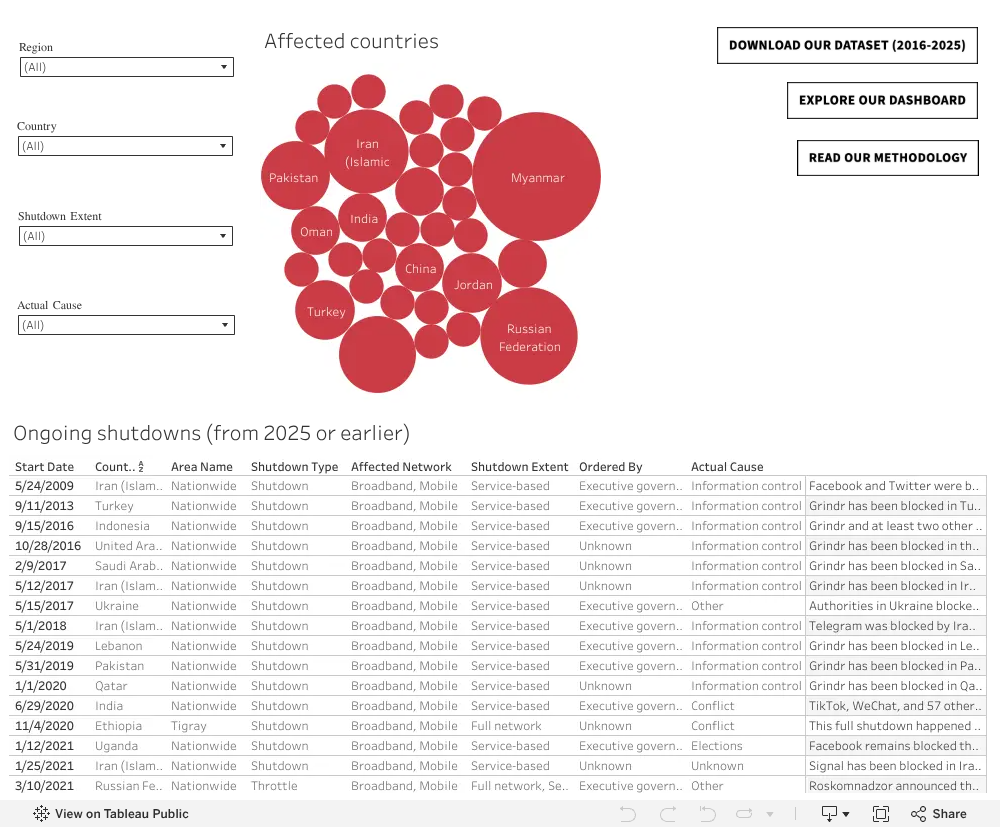
For more information about ongoing shutdowns, explore our new dashboard below.
As we write, people in parts of Myanmar continue facing repeated and prolonged internet shutdowns amid deadly violence, as the junta’s control and surveillance of communications networks creates an “internet dead zone” where few dare to speak openly against the regime. In Tigray, Ethiopia, meanwhile, new internet shutdowns are raising fears that the same population that was cut off from the internet for over two years during a bloody civil war will once again be disconnected and in even greater danger. And the list goes on.
Authorities that use prolonged or repeated shutdowns to control the flow of information, quell protests, manipulate electoral processes, or assert political power during or after conflict are collectively punishing and isolating entire populations. The impact is deep and enduring; even when authorities claim to have ended a shutdown, connectivity often does not return in any meaningful way. While every shutdown is a disaster for human rights, these indefinite shutdowns erode trust that a usable, open, secure, and inclusive internet will ever return. As new research from Vodafone confirms, this has profoundly negative consequences for people’s lives and livelihoods.
Following are direct testimonies from people living in a state of perpetual digital darkness, from Annobón and Gaza to Myanmar and Sudan. Read on to learn how prolonged shutdowns impact people’s lives, and what the international community can do to stop them.
The human impacts of indefinite shutdowns
These testimonies were collected through Access Now’s Shutdown Impact Stories project and our partners in the #KeepItOn coalition, and span from 2024-2026. Testimonies from Myanmar are courtesy of the Bridging Voices Project led by Border Voices and Friends without Borders Foundation. All stories have been anonymized for security reasons.
What we can do to end indefinite shutdowns
With such clear and devastating harms, the international community can no longer allow internet shutdowns to linger on indefinitely without transparency or accountability. We must increase the pressure on states perpetrating prolonged shutdowns, deepen investment in alternative connectivity solutions, and create new mechanisms and processes to keep people connected during crises and conflicts. As a start, we recommend that:
- States and international organizations significantly ramp up their efforts to develop and strengthen norms to prevent, mitigate, and end internet shutdowns, especially given the severity of the impact prolonged shutdowns have had on some of the world’s most vulnerable populations, as civil society has documented over many years.
- The Freedom Online Coalition (FOC) should deepen its commitment to condemn internet shutdowns and shape global norms to prevent, mitigate, and combat internet shutdowns, pursue accountability, and expand its reach to speak out against under-reported and prolonged shutdowns.
- Governments, funders, regulators, satellite internet providers, and international institutions should invest in alternative connectivity solutions to provide secure, high-quality, affordable internet access in areas with low to no connectivity or indefinite platform blocks. This also requires exploring innovative and rights-based forms of governance in establishing emergency connectivity mechanisms inclusive of emerging technologies, as called for by the Direct2Cell campaign.
- State parties to conflict, peace mediators, and other stakeholders should continue to work toward considering the digital dimension of ceasefires in recent and active conflicts around the world, and include adequate funding and support for digital systems in reparations and reconstruction plans in areas where telecommunications infrastructure has not been properly repaired.
- States should heed court rulings against shutdowns, and enforce the courts’ judgments. From regional bodies like the Economic Community of West African States (ECOWAS) Court of Justice to national judiciaries in Sudan, India, Zimbabwe, and elsewhere, jurists find that shutdowns violate rights and offend the rule of law. We encourage more stakeholders to help implement these rulings.
Your voice matters too. If you or your organization would like to strengthen the global movement to stop internet shutdowns, there are a number of ways you can do that.
- Explore #KeepItOn’s new ongoing shutdowns dashboard: we encourage NGOs, journalists, and media organizations to explore our dashboard tracking ongoing internet shutdowns, to use in your own research and advocacy
- Join the #KeepItOn coalition: your organization can bolster collective efforts to fight shutdowns around the world
- Share your story with us: if you’ve experienced a shutdown, your testimony can help persuade policymakers to take action
- Make a donation to Access Now: your support is vital for #KeepItOn and all the work we do at Access Now
The #KeepItOn campaign is celebrating its 10th anniversary this year, and this fight matters more than ever. Let’s keep working together for a future where the internet is open, secure, and safe for all people.